
Collection: Juice
Admeo is offering enzymatic and colorimetric reagent kits for more than eighteen quality parameters in juice.
Our reagent kits stand out for cost efficiency because of the shelf life of 18 to 36 months.
Calibration standard is included in every kit.
-
Total Sulfite, Y200 / Y400 and Spica format, reagent kit for wine, kombucha and cider

- Kit volume: 225 ml
- Method: Two-reagent differential at 405 nm
- Limit of linearity: 400 mg/l
- Limit of detection: 1 mg/l (ppm)
-
Tartaric Acid
 Tartaric acid is the main acid of wine that can become insoluble, forming various salts. This acid produces the fruity aromas and freshness of wines and is the most commonly used acidifier. Info + Purchase
 -
Acetic Acid, Y200 / Y400 format
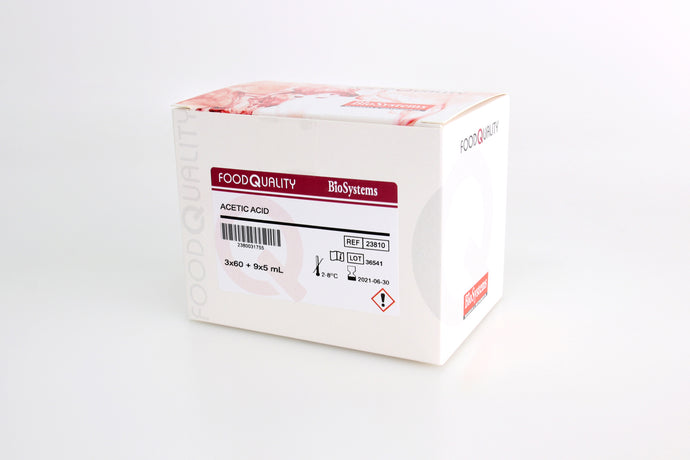 Acetic acid is produced during both alcoholic and malolactic fermentations and helps enhance flavors and aromas. When the wine is aerated or remains in contact with air, acetic acid bacteria can multiply, leading to a problem known as “acetic spoilage”. The characteristic aroma of this spoilage is due to ethyl acetate. Info + Purchase
 -
L-Lactic Acid, reagent kit for wine, kombucha, beer and juice
 L-lactic acid is the product of the metabolism of malic acid during the malolactic fermentation. L-lactic acid is perceived as less acidic and softer on the palate compared to malic acid. Info + Purchase
 -
Ion Multical
 IONS MULTICAL. 5 levels with 10 mL. Multiparameter calibrator with five synthetic matrix liquid levels that contain various metals at adequate concentrations to calibrate the measurement procedures. Info + Purchase
 -
MultiReference

- Multi parameter quality control
- 2 x 10ml
- Acetic Acid, Ammonia, Citric Acid, D-Gluconic Acid, D-Glucose, D-Glucose/D-Fructose, Glycerol, D=Lactic Acid, L-Lactic Acid, Primary Amino Nitrogen, Sucrose/D-Glucose/D-fructose, L-Malic Acid. (12 total tests)
-
Total Acidity, Y200 / Y400 and Spica format, reagent kit for wine, kombucha and cider
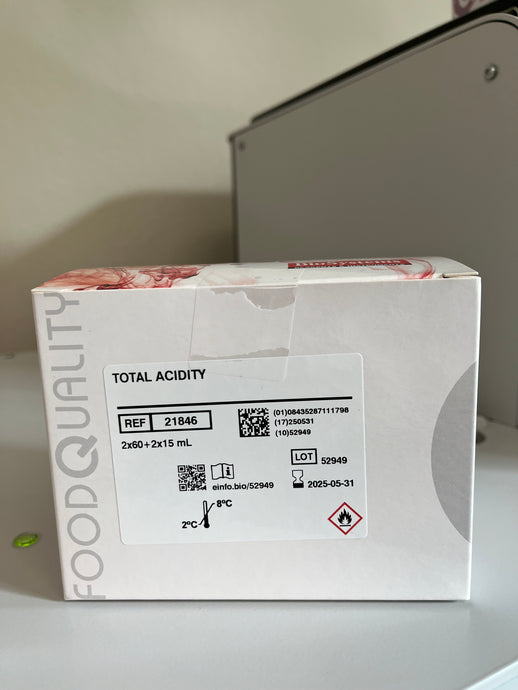
- Kit volume: 150 ml
- Method: Two-reagent differential at 620 nm
- Limit of linearity: 12 g/l
-
Primary Amino Nitrogen (PAN), Y200 / Y400 and Spica format, reagent kit for wine, kombucha and cider

- Kit volume: 150 ml
- Method: Two-reagent differential at 340 nm
- Limit of linearity: 400 mg/l
- Limit of detection: 1 mg/l (ppm)
-
Ammonia, Y200 / Y400 and Spica format, reagent kit for wine, kombucha and cider

- Kit volume: 150 ml
- Method: Two-reagent differential at 340 nm
- Limit of linearity: 200 ml/l
- Limit of detection: 3.0 mg/l (ppm)
- Low nitrogen levels have been related to slow fermentation or sulfide production. Conversely, high levels can lead to microbial instability and production of ethyl carbonate
-
Acetic Acid, MAXI size, Y200/Y400
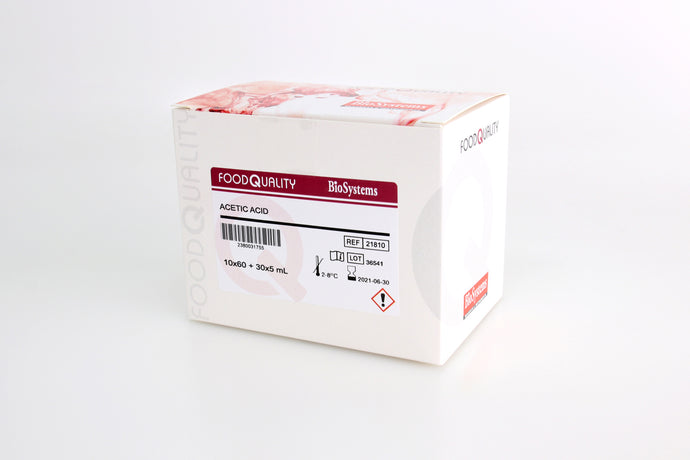 Acetic acid is produced during both alcoholic and malolactic fermentations and helps enhance flavors and aromas. When the wine is aerated or remains in contact with air, acetic acid bacteria can multiply, leading to a problem known as “acetic spoilage”. The characteristic aroma of this spoilage is due to ethyl acetate. Info + Purchase
 -
L-Malic Acid, MAXI kit
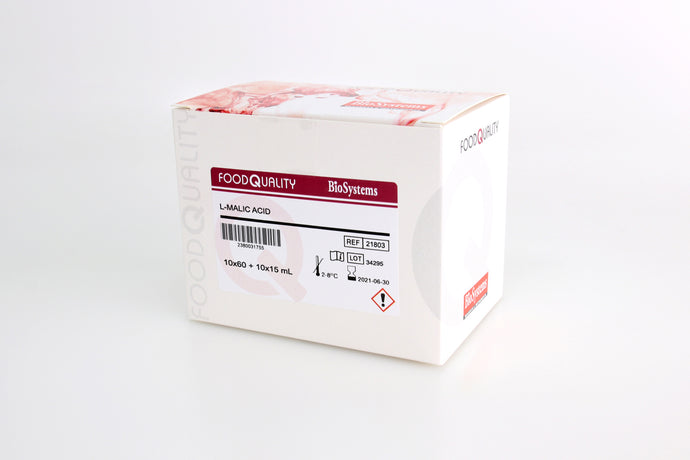 L-malic acid is responsible for the sharply acidic, green apple flavor in wine. It’s fermentation yields L-lactic acid and causes perceived acidity to soften. Info + Purchase
 -
D-Glucose / D-Fructose, MAXI size
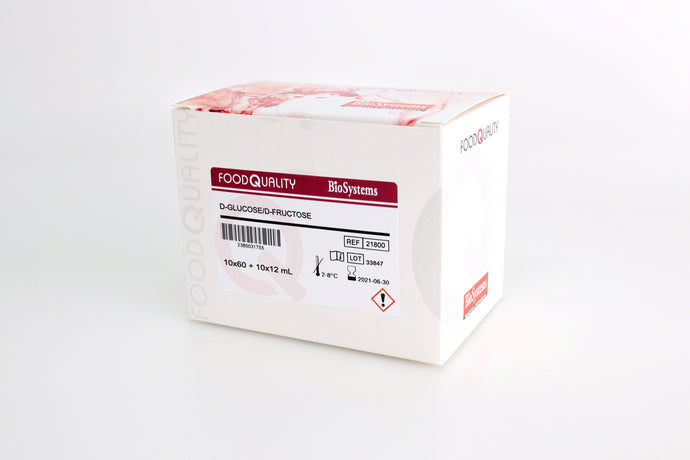 This test indicates the best moment for grape harvesting and allows alcoholic fermentation to be monitored. It is widely used to determine the dryness of the wine before bottling. Info + Purchase


- Previous page
- Page 2 of 4
- Next page